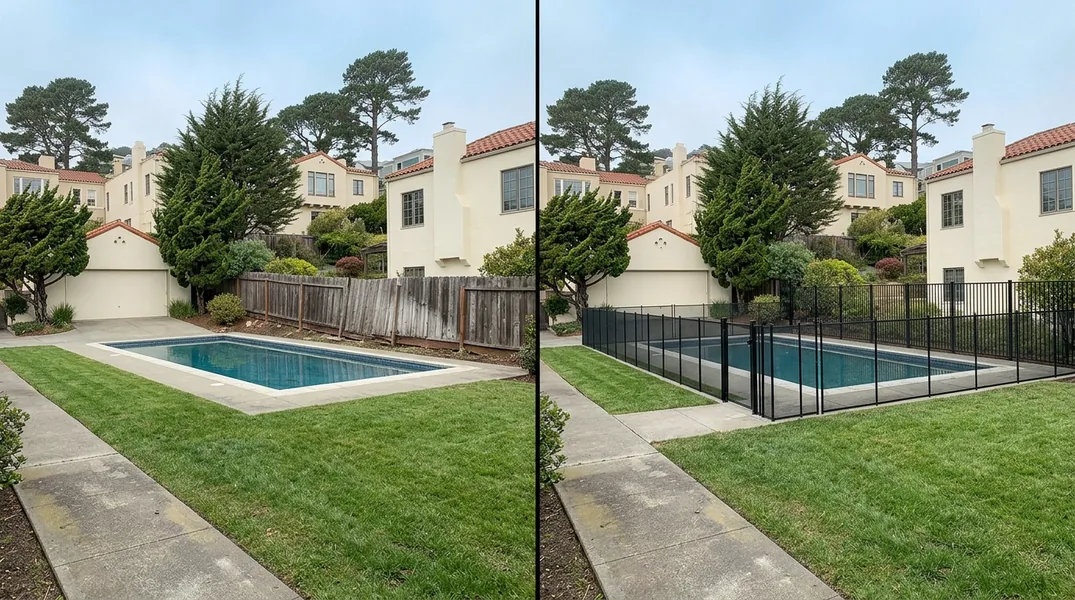
Understanding California Pool Fence Code Requirements
Installing a pool fence isn't just about aesthetics or privacy. In California, pool fencing is a serious safety requirement governed by strict building codes designed to prevent accidental drowning, especially among young children. If you own a swimming pool in San Francisco, you need to understand these regulations before moving forward with any installation project.
California's pool safety requirements are outlined in the California Building Code (CBC), which adopts and modifies the International Building Code standards. These codes apply to all residential pools, spas, and hot tubs. The regulations cover everything from barrier height and spacing to gate mechanisms and visibility requirements. Non-compliance can result in fines, liability issues if an accident occurs, and difficulty selling your home. Many homeowners don't realize that an improperly installed pool fence could actually increase their legal liability rather than protect them.
Before you hire a contractor or purchase materials, take time to understand what your San Francisco property requires. These aren't optional guidelines. They're mandatory safety standards that protect your family and visitors while keeping you compliant with local law.
Pool Fence Height Requirements: Getting It Right
One of the most fundamental pool fence code requirements is height. California law mandates that pool barriers must be at least 4 feet tall, measured from the ground level on the pool side of the fence. This height requirement is non-negotiable and applies to all residential pools. The reasoning is straightforward: a 4-foot barrier is difficult for small children to climb over, providing a critical layer of protection.
However, height alone isn't enough. The fence must also be constructed so that there are no handholds or footholds that would make climbing easier. This is why chain-link fencing with large diamond openings is often preferred for pool safety, though Wood & Privacy Fence Installation can also meet code if properly designed. If you're considering a wooden fence, the boards must be spaced closely enough that a 4-inch sphere cannot pass through any opening. Additionally, the fence cannot have horizontal rails on the pool side that could serve as climbing aids.
Measuring height can be tricky if your yard has slopes or uneven terrain. This is one reason why working with experienced fence installers who understand local codes is essential. They'll ensure your fence meets the exact specifications required by California law, not just approximately.
Self-Closing Pool Gate Requirements and Regulations
Perhaps the most critical component of pool fence compliance is the gate mechanism. California code requires that any gate providing access to the pool area must be self-closing and self-latching. This means the gate cannot be left open accidentally. A self-closing pool gate uses a spring mechanism or hydraulic closer that automatically shuts the gate after someone passes through. The self-latching feature ensures the gate locks securely without requiring manual intervention.
The latch mechanism itself must be positioned at least 54 inches above the ground level and must not be accessible to children. This prevents small children from being able to reach and operate the latch. Additionally, the gate must open away from the pool, not toward it. This directional requirement ensures that if someone falls, they fall away from the water rather than into it. Many homeowners overlook this detail, but it's a specific requirement in California code.
If you have multiple gates providing access to your pool area, each one must meet these same standards. This includes gates on side yards, back gates, and any other entry points. A single non-compliant gate can make your entire pool barrier system fail inspection. When you're planning your pool fence installation, make sure to discuss gate specifications thoroughly with your contractor before work begins.
Additional Barriers and Visibility Considerations
California's pool safety code recognizes that a perimeter fence isn't the only acceptable barrier method. Homeowners can also use walls of their house as part of the pool barrier system, provided those walls meet the same height and access requirements. Some properties use a combination of the house wall and fencing to create a complete enclosure. Additionally, removable safety barriers and pool covers can supplement (but not replace) a proper fence installation.
Visibility is another often-overlooked requirement. While privacy fencing is popular for aesthetic reasons, California code actually requires that the pool area be visible from the house or that an approved alarm system be installed. This is why many homeowners in San Francisco choose Chain Link Fence Installation for pool areas, as it allows clear sightlines while still providing a secure barrier. If you prefer privacy, you'll need to install an approved pool alarm system that alerts you when the barrier is breached.
Some properties also benefit from using a combination approach. For example, you might use chain-link fencing on one side to maintain visibility and Wood & Privacy Fence Installation on another side where privacy is desired, as long as you install a compliant alarm system. Understanding these options helps you balance safety, privacy, and aesthetics for your specific situation.
Local San Francisco Inspection and Permit Process
Before installing any pool fence in San Francisco, you'll need to obtain the proper permits from the Department of Building Inspection. This isn't a step you can skip or work around. Installing a pool fence without permits can result in fines and may prevent you from selling your home or obtaining homeowner's insurance coverage for pool-related incidents.
The permit process typically involves submitting plans showing your proposed fence design, dimensions, gate specifications, and how it complies with California Building Code requirements. The city will review these plans to ensure they meet all safety standards. Once approved, an inspector will visit your property after installation to verify that the work was completed according to the approved plans and code requirements.
This is where professional experience matters. Contractors who regularly work in San Francisco understand the local inspection process and know exactly what the city requires. They can help you navigate the permit process smoothly and ensure your installation passes inspection on the first attempt, saving you time and frustration.
Getting Professional Help: Pool Fence Installation Near Me
Given the complexity and legal importance of pool fence code compliance, hiring an experienced contractor is one of the smartest decisions you can make. San Francisco Fence specializes in helping homeowners understand and meet all pool safety requirements. Whether you need Wood & Privacy Fence Installation, chain-link barriers, or a combination approach, our team knows California code inside and out.
When you contact us for a free estimate, we'll assess your property, explain which code requirements apply to your specific situation, and recommend the best approach for your needs and budget. We handle all the permit paperwork, coordinate with city inspectors, and ensure your installation is fully compliant. You can reach San Francisco Fence at (628) 241-1526 to discuss your pool fencing project.
Don't risk non-compliance or safety issues by cutting corners. A properly installed, code-compliant pool fence protects your family, your guests, and your legal standing as a homeowner. Let the professionals handle it right the first time.
Looking for a professional fence contractor in San Francisco? San Francisco Fence responds fast for all your fence needs.
Get a Free Quote