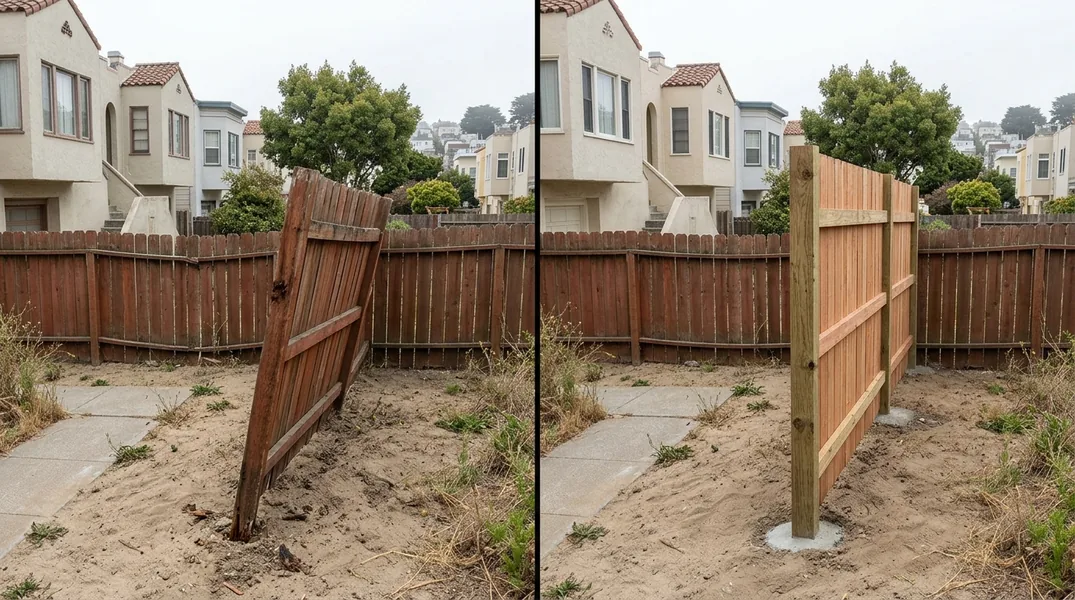
The Perfect Storm: Why San Francisco Fences Lean
If you own a home in San Francisco, you've probably noticed that many fences in the neighborhood seem to tilt at odd angles. This isn't just a cosmetic quirk or a sign of lazy installation. The reality is that San Francisco's unique climate and geology create perfect conditions for fence posts to shift, settle, and eventually lean. Understanding these conditions is the first step toward protecting your property and avoiding costly damage down the line.
The Bay Area's coastal environment combines three major factors that work against fence stability: persistent fog and moisture, sandy and unstable soil conditions, and the legacy of bay fill in many neighborhoods. When these elements work together, they create a hostile environment for traditional fence posts, especially those made from wood. Even properly installed fences can begin to show signs of stress within just a few years if the underlying causes aren't addressed.
Fog, Moisture, and Wood Decay: The Silent Enemy
San Francisco's famous fog is beautiful, but it's also relentless. The marine layer that rolls in from the Pacific Ocean brings constant moisture that settles on everything, including your fence. Unlike drier climates where wood can weather gracefully, San Francisco's persistent dampness creates ideal conditions for wood rot, fungal growth, and structural decay. When moisture penetrates the wood fibers of fence posts, it triggers a cascade of problems that ultimately lead to instability and leaning.
Wood that stays damp for extended periods becomes soft and loses its load-bearing capacity. The rot doesn't always announce itself visibly either. A post might look solid on the surface while the interior is being hollowed out by decay. This hidden damage is why Wood & Privacy Fence Installation in coastal areas requires special attention to drainage, post treatment, and maintenance schedules. Homeowners who neglect regular inspections often discover the problem only when the fence has already begun to lean noticeably, at which point professional repair becomes necessary.
Sandy Soil and Bay Fill: Unstable Foundations
Beneath the surface, San Francisco's soil tells a complicated story. Much of the city, especially neighborhoods closer to the bay, was built on fill material and sandy soils that lack the compaction and stability of native earth. This sandy, shifting soil cannot support fence posts with the same reliability as denser clay or rock-based soils found in other regions. When a post is set in sand, it has far less lateral resistance, meaning it can move more easily when subjected to wind, weight, or ground settling.
Bay fill, in particular, presents unique challenges. This material was dumped to expand the waterfront over the past century and a half, and it remains poorly consolidated. Posts driven into or set within bay fill areas are prone to subsidence, where the ground gradually settles and compacts over time. This settling is often uneven, which means one side of a post might sink faster than another, causing the characteristic lean that homeowners observe. If your property is in an area built on fill, you're at higher risk for fence problems and may need more frequent inspections and maintenance than properties on natural soil.
Recognizing Rotted Fence Post Repair Needs Before It's Too Late
The key to avoiding major fence failures is catching problems early. Rotted fence post repair becomes much more affordable and less disruptive when you identify decay in its early stages, rather than waiting until the fence has leaned significantly or collapsed. Start by walking your fence line regularly and looking for visual warning signs. These include soft spots in the wood, visible discoloration or darkening, peeling bark, mushroom or fungal growth at the base, and any sections that feel spongy when you press on them with a screwdriver or tool.
Pay special attention to the bottom 12 inches of each post, where soil contact is greatest and moisture accumulation is most likely. This is where rot typically begins. If you notice that your fence has started to lean, that's a signal that structural integrity has already been compromised. At this point, you need professional assessment. The longer you wait, the more posts may be affected, and the more expensive the overall repair will become. A simple free estimate from San Francisco Fence can help you understand the scope of damage and your options for moving forward.
Fence Post Replacement: The Right Solution for Leaning Fences
When posts have rotted significantly or the fence has begun to lean noticeably, replacement is often the most practical solution. Fence post replacement involves removing the damaged post and installing a new one that's properly set and secured. This might sound straightforward, but in San Francisco's challenging soil conditions, it requires expertise. The new post must be set at the correct depth, with proper concrete anchoring, and ideally using pressure-treated or naturally rot-resistant wood species that can better withstand the Bay Area's moisture.
The cost and complexity of fence post replacement depend on several factors, including how many posts need replacement, the type of fence material, soil conditions at your property, and whether additional structural reinforcement is needed. Some homeowners can address one or two isolated posts, while others discover that multiple posts along a fence line need attention simultaneously. This is why a professional inspection is so valuable. San Francisco Fence can evaluate your specific situation, identify all problem areas, and provide honest guidance on whether you need spot repairs or more comprehensive work. Call us at (628) 241-1526 to discuss your fence's condition.
Prevention and Long-Term Maintenance: Protecting Your Investment
The best approach to fence problems is prevention. Once you've invested in Wood & Privacy Fence Installation or repaired an existing fence, protecting that investment requires ongoing attention. In San Francisco's climate, this means implementing good drainage around your fence line, trimming vegetation that traps moisture against posts, and scheduling regular inspections at least twice per year. Consider installing post caps and ensuring that any wood is sealed appropriately to resist moisture penetration.
If you're planning a new fence installation, discuss soil conditions and moisture management strategies with your contractor upfront. Some areas may benefit from deeper post setting, concrete footings with better drainage, or the use of alternative materials like Vinyl & PVC Fence Installation, which eliminates wood rot concerns entirely. Whatever approach you choose, the key is addressing San Francisco's unique environmental challenges rather than ignoring them. Regular maintenance now will save you thousands in emergency repairs later. When you're ready to evaluate your fence or plan a new installation, reach out to San Francisco Fence at (628) 241-1526 or visit our website to request a free estimate.
Looking for a professional fence contractor in San Francisco? San Francisco Fence responds fast for all your fence needs.
Get a Free Quote