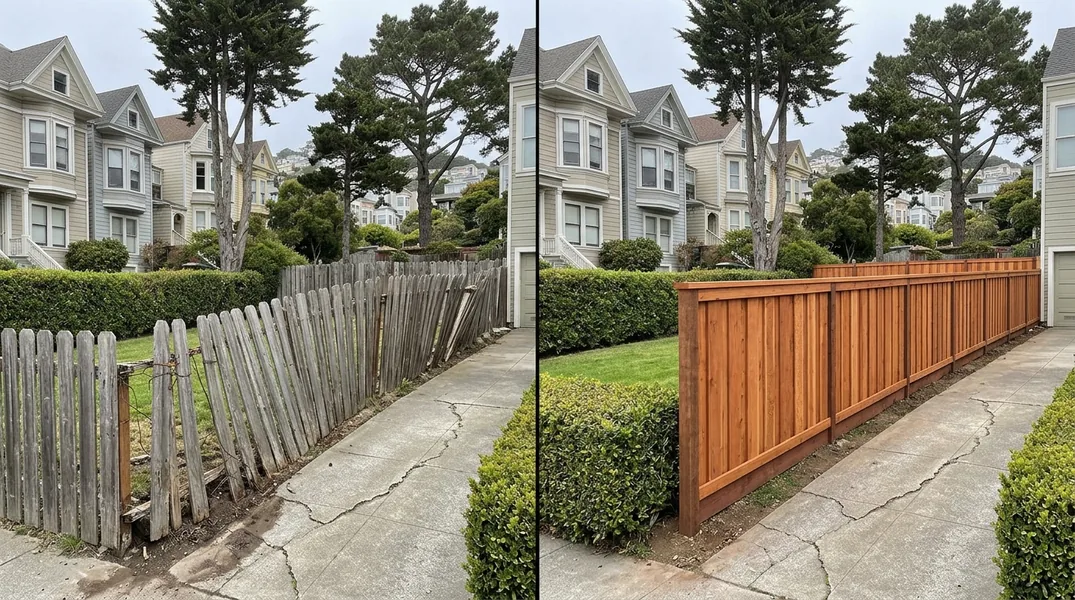
Understanding San Francisco's Unique Climate Challenges
Living in San Francisco means dealing with one of the most challenging environments for outdoor structures in California. The combination of persistent fog, salt air from the Pacific Ocean, and fluctuating temperatures creates a perfect storm for fence deterioration. Most homeowners don't realize that the salt air alone can accelerate corrosion and material breakdown far faster than in inland communities.
When choosing between vinyl vs wood fence materials, understanding how each responds to these coastal conditions is essential. The fog brings constant moisture, which penetrates deeply into porous materials. Salt particles travel miles inland and settle on everything, creating a corrosive environment that standard materials weren't designed to withstand. A fence that might last 20 years in Sacramento could fail in half that time here without proper material selection and maintenance.
Wood Fence Performance in Coastal Conditions
Wood & Privacy Fence Installation has been the traditional choice for San Francisco homeowners for generations. Wood offers natural beauty, warmth, and character that many people find irreplaceable. When properly treated and maintained, wood can indeed last 15 to 20 years in our climate. However, the key phrase here is proper treatment and maintenance. Without consistent care, wood fences in San Francisco's fog and salt air typically deteriorate much faster than homeowners expect.
The primary enemy of wood fences in coastal areas is rot. Salt air accelerates wood decay, and the constant moisture from fog keeps wood perpetually damp. Even pressure-treated lumber, which resists rot better than untreated wood, requires regular sealing and staining every 2 to 3 years to maintain its integrity. Additionally, salt air can corrode the metal fasteners holding your fence together, causing structural weakness and safety concerns. Many homeowners underestimate the ongoing commitment required to keep a wood fence looking good and functioning properly in our unique environment.
Vinyl Fence: The Low-Maintenance Alternative
Vinyl & PVC Fence Installation has emerged as a compelling alternative for Bay Area homeowners seeking to reduce maintenance demands. Vinyl fencing is engineered to resist rot, salt air, and moisture without requiring the constant upkeep that wood demands. It won't splinter, warp, or decay, and it doesn't need sealing, staining, or painting year after year. For many homeowners, this represents a genuine lifestyle upgrade, especially if you'd rather spend weekends enjoying your yard than maintaining your fence.
The salt air and fog that wreak havoc on wood have minimal impact on quality vinyl materials. Vinyl doesn't absorb moisture, so it remains unaffected by San Francisco's perpetual dampness. It also resists the corrosive effects of salt particles far better than wood or metal alternatives. When you choose vinyl, you're essentially choosing a fence that will look nearly the same in 10 years as it does on installation day, provided you occasionally rinse it with fresh water to remove salt and debris buildup.
Wood vs Vinyl Fence Cost: Initial Investment vs Long-Term Value
When comparing vinyl vs wood fence cost, the initial investment tells only part of the story. Wood fencing typically costs less upfront, which is why many homeowners choose it initially. However, you must factor in the hidden costs of maintenance over the fence's lifetime. A wood fence might cost 30 to 40 percent less to install, but you'll spend thousands more over 15 years on sealing, staining, repairs, and eventual replacement of rotted sections. In San Francisco's harsh coastal environment, these maintenance costs add up quickly.
Vinyl fencing carries a higher initial pricing tag, often 20 to 40 percent more than wood. However, this higher upfront cost is offset by virtually no maintenance expenses. You won't need to seal, stain, or paint. You won't deal with rot, splinters, or corroded fasteners. When you calculate the true cost of ownership over 20 to 30 years, vinyl often proves more economical despite the higher initial investment. The best fence material isn't always the cheapest one to install, it's the one that provides the best value over time.
Durability Comparison in Salt Air and Fog
Durability is where the coastal climate truly separates material performance. Wood fences in San Francisco typically last 12 to 18 years before significant deterioration occurs, and that's with diligent maintenance. Without regular sealing and staining, you might see problems within 5 to 10 years. Vinyl fences, by contrast, are engineered to last 20 to 30 years or more, even in challenging coastal environments. This isn't marketing hype, it's a direct result of how vinyl chemically resists the specific stressors present in our region.
The salt air in particular creates a harsh testing ground for durability claims. Homeowners often notice that metal components of wood fences corrode first, followed by wood rot at the base and joints where moisture accumulates. Vinyl eliminates these failure points entirely. The material doesn't rot, the fasteners are typically stainless steel or vinyl-coated, and the joints are sealed to prevent water infiltration. If you're planning to stay in your home for decades, vinyl's superior durability in San Francisco's climate becomes increasingly attractive.
Choosing the Best Fence Material for Your San Francisco Home
Selecting the best fence material for your property requires honest self-assessment. Ask yourself these questions: How much time and money are you willing to invest in maintenance? How long do you plan to stay in your home? What aesthetic matters most to you? Wood offers undeniable charm and can be customized in ways vinyl cannot, but only if you're committed to its upkeep. Vinyl offers peace of mind and a modern look that works well with contemporary homes, but it may feel less authentic to homeowners who prize traditional character.
The best low maintenance fence for San Francisco is unquestionably vinyl. If maintenance concerns you at all, vinyl eliminates them. However, if you love the natural appearance of wood and are willing to commit to regular sealing and staining, wood can still be a viable choice, particularly if you use premium cedar or redwood rather than pressure-treated pine. Many homeowners find a middle ground by choosing vinyl for side and back yards where aesthetics matter less, and investing in quality wood for front-facing sections where curb appeal is paramount. Whatever you decide, the climate reality of San Francisco should heavily influence your choice.
Getting Expert Guidance: Wood & Privacy Fence Installation Near Me
The best decision starts with professional input from contractors who understand San Francisco's specific challenges. San Francisco Fence has installed hundreds of fences throughout our coastal region and understands exactly how different materials perform in our fog and salt air. Whether you're leaning toward wood or vinyl, or you're still undecided, our team can walk you through the pros and cons specific to your property's location and microclimate.
We recommend scheduling a free estimate to discuss your options with someone who knows this area intimately. Call us at (628) 241-1526 to arrange a consultation. We'll assess your property, discuss your maintenance tolerance, review your budget, and recommend the material that will serve you best for decades to come. The right fence choice today means fewer headaches and regrets tomorrow.
Looking for a professional fence contractor in San Francisco? San Francisco Fence responds fast for all your fence needs.
Get a Free Quote